
Dryer Transition Hose Replacement in Portland, OR
Replace Unsafe Transition Hoses with Code-Compliant Materials
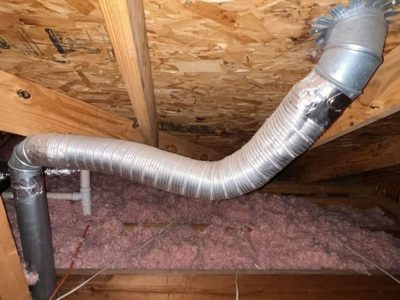
The Transition Hose Is the Most Vulnerable Part of Your Dryer Vent System
The transition hose is the short, flexible duct that connects your dryer to the wall vent. It's the section most likely to become crushed, kinked, disconnected, or made of the wrong material — and it's a leading cause of dryer fires.
Many homes still have vinyl or thin foil transitions that don't meet current fire safety codes. These materials melt, tear, and trap lint far more easily than proper semi-rigid aluminum.
At Dryer Vent John, we replace unsafe and damaged transition hoses with UL-listed, code-compliant semi-rigid aluminum for homes, apartments, and businesses in Portland, OR, and the surrounding metro area.
Why Transition Replacement Matters
Your transition hose takes the most abuse in the system — it's compressed when the dryer is pushed against the wall, bent during installation, and exposed to the highest temperatures. A damaged transition causes:
Fire Hazards
Vinyl and foil transitions can melt under dryer exhaust temperatures. Lint accumulates in crushed sections and can ignite. Semi-rigid aluminum resists heat and is far less likely to trap dangerous amounts of lint.
Poor Dryer Performance
A kinked or crushed transition restricts airflow, making your dryer work harder and take longer to dry clothes. Replacing it restores full airflow immediately.
Lint Leaks & Hidden Buildup
Disconnected or torn transitions leak lint into the wall cavity, crawl space, or behind the dryer — creating hidden fire hazards you can't see or clean.
Code Violations
Oregon building code requires semi-rigid or rigid aluminum transitions. Vinyl and thin foil don't meet code and will fail a home inspection.
Higher Energy Costs
Restricted airflow from a damaged transition forces your dryer to run longer cycles, increasing your electric or gas bill.
Signs Your Dryer Transition Needs Replacement
- Dryer is pushed tight against the wall, crushing the transition
- Visible kinks, tears, or holes in the transition hose
- Transition made of white vinyl or thin foil material
- Lint collecting behind or under the dryer
- Hot, humid air around the dryer while it's running
- Burning smell from the dryer
- Dryer taking multiple cycles to dry a load
- Transition connected with duct tape instead of proper clamps
If any of these apply, your transition hose is compromising your dryer's safety and performance.
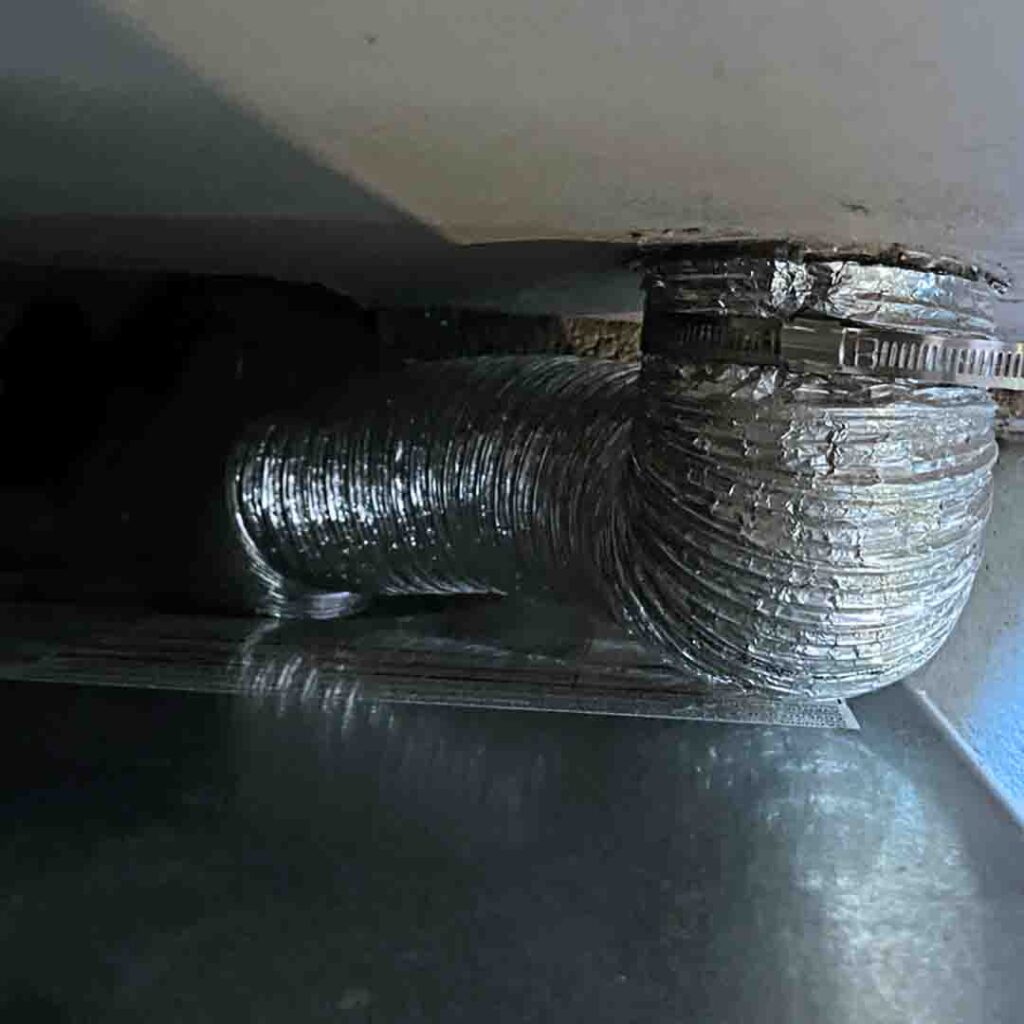
Our Transition Replacement Process
- 1
Assessment
We pull the dryer out, inspect the current transition material, check for damage and lint accumulation, and measure for proper length.
- 2
Old Transition Removal
We safely disconnect and remove the old transition, clean out any lint that has accumulated behind the dryer and at the wall connection.
- 3
New Transition Installation
We install a UL-listed semi-rigid aluminum transition hose, properly sized for your dryer and wall vent. Connections are secured with proper worm-drive clamps — never tape.
- 4
Dryer Repositioning
We carefully push the dryer back, ensuring the new transition isn't crushed, kinked, or compressed. Proper clearance is maintained for safe airflow.
- 5
Airflow Verification
We run the dryer and verify strong, unobstructed airflow at the exterior vent cap.
-
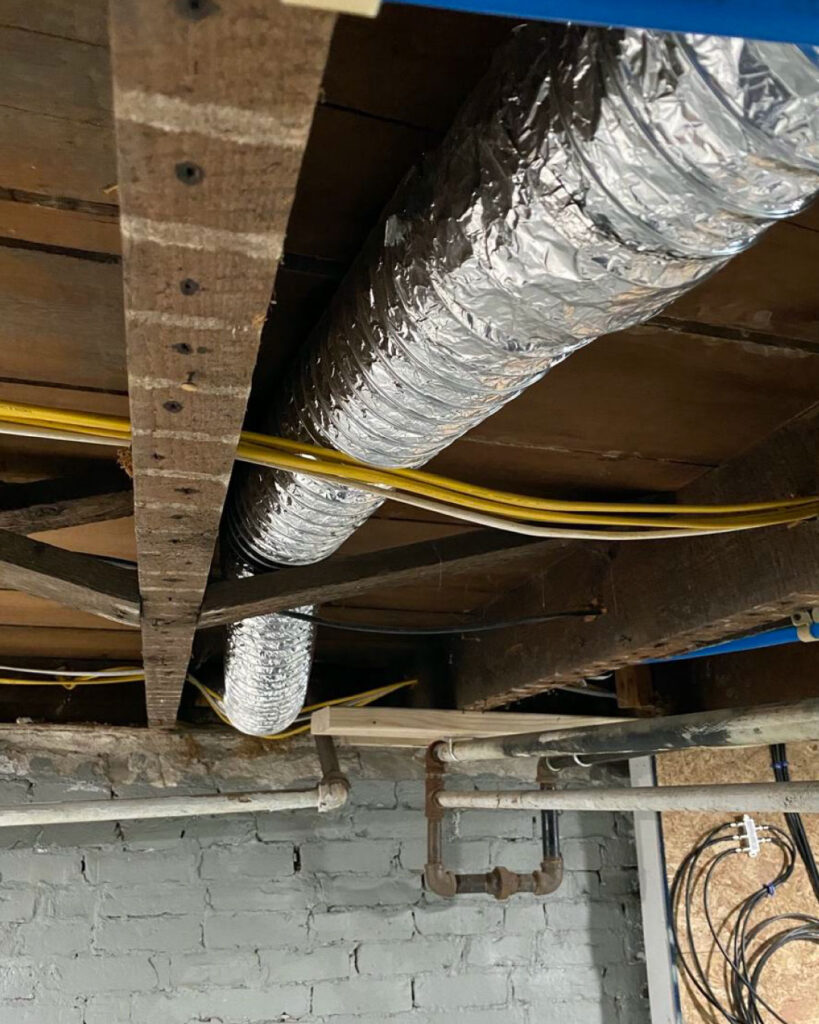
Did You Know?
The flexible transition hose behind your dryer is the section most likely to kink, crush, or disconnect — and foil or vinyl hoses can ignite. Duct and vent problems are a leading factor in the roughly 2,900 dryer fires reported in U.S. homes each year.
Source: U.S. Fire Administration
Serving Homes & Businesses in Portland, OR
Dryer Vent John provides dryer transition replacement services for:
Homes & Apartments
Single-family homes, condos, and apartment complexes
Businesses & Commercial Properties
Laundromats, hotels, salons, and more
Property Managers & HOAs
Multi-unit buildings and rental properties
Don't risk a house fire from a cheap, damaged, or code-violating transition hose. A quick, affordable replacement is one of the best things you can do for dryer safety.
Dryer transition replacement across the Portland metro
No trip charges or mileage fees anywhere in our service area.
- Beaverton dryer transition replacement
- Lake Oswego dryer transition replacement
- Tigard dryer transition replacement
- Gresham dryer transition replacement
- Hillsboro dryer transition replacement
- Tualatin dryer transition replacement
- West Linn dryer transition replacement
- Oregon City dryer transition replacement
- Milwaukie dryer transition replacement
- Clackamas dryer transition replacement
- Happy Valley dryer transition replacement
Related Dryer Vent Services
Dryer Vent Cleaning
Remove dangerous lint buildup, reduce fire risk, and restore your dryer's efficiency.
Learn moreDryer Vent Repair
Fix crushed, disconnected, or damaged vent lines for safe, efficient performance.
Learn moreDryer Vent Installation
New code-compliant vent systems for homes, apartments, and commercial properties.
Learn moreDryer Vent Inspection
Comprehensive safety assessments to catch problems before they become hazards.
Learn moreVent Cover Replacement
Protect your vent from pests, debris, and weather damage with durable covers.
Learn moreInterior De-Linting
Deep-clean inside your dryer to remove hidden lint from internal components.
Learn moreLint Trap Cleaning
Professional lint trap and screen cleaning for better airflow and safety.
Learn moreBooster Fan Services
Repair and install booster fans for long vent runs that need extra airflow.
Learn morePest Removal
Remove birds, rodents, and nesting materials, then sanitize the entire line.
Learn moreFrequently Asked Questions
Vinyl melts at dryer exhaust temperatures and is a known fire hazard. Thin foil tears easily and traps lint in its ridges. Neither meets current building code. Semi-rigid aluminum is the safe, code-compliant standard.
Pull the dryer out a few inches and look at the hose connecting it to the wall. White plastic = vinyl (replace immediately). Thin, shiny, easily crushed = foil (replace). Silver, holds its shape = semi-rigid aluminum (check for damage).
While it's one of the simpler dryer vent jobs, improper installation can leave gaps, kinks, or crushed sections. Professional installation ensures proper sizing, clamping, and clearance.
Most replacements take 30–45 minutes including inspection, old hose removal, new installation, and airflow verification.
Yes — many customers pair transition replacement with a full vent cleaning. We can do both in one visit.